Ingredients
Niacinamide: Is 10% Too Much?
More niacinamide doesn’t mean more results. The clinical data makes that surprisingly clear.
The Concentration Curve
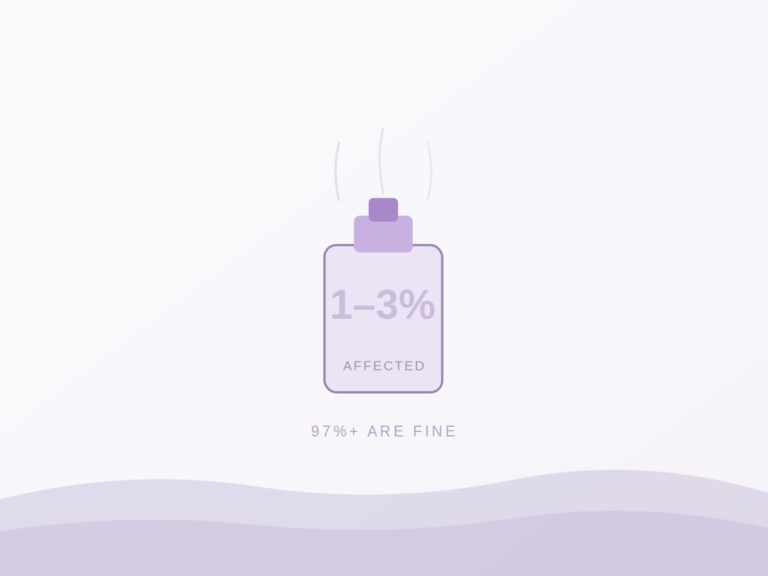
The dose-response for niacinamide isn’t a straight line. Clinical benefits cluster around 2–5%, and beyond that you mostly raise the risk of irritation rather than adding proven efficacy.
What It Actually Does
Barrier Support
Ceramide · FA · cholesterol
Upregulates lipid synthesis. Measurable TEWL improvement in 4 weeks.
Pigmentation
Melanosome transfer
Doesn’t block melanin — stops it reaching the surface. Comparable to 4% HQ.
Sebum Control
2% clinical dose
Reduces sebum excretion in Japanese subjects within 2–4 weeks. More modest in Caucasian subjects.
Anti-Aging
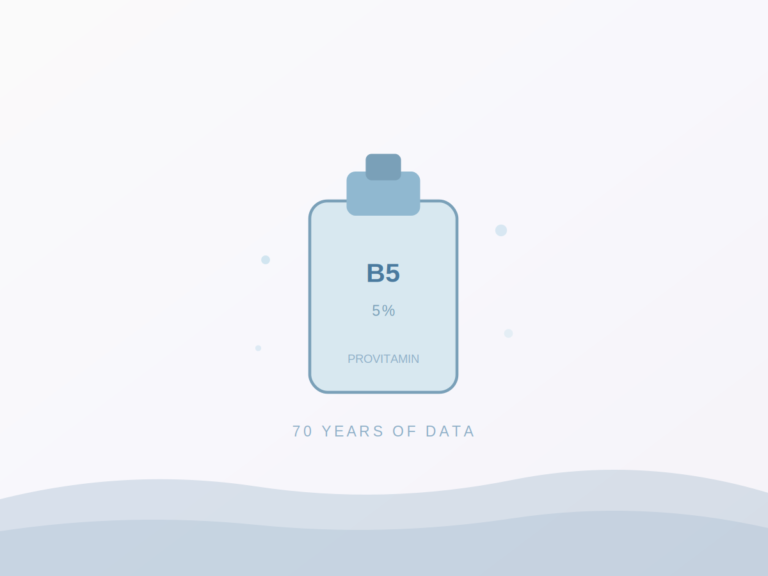
5% · 12 weeks
~5.5% wrinkle area reduction. Real — but not retinol territory.
Compatibility: Everything
Niacinamide pairs with retinol, vitamin C (the old incompatibility myth has been debunked), hyaluronic acid, peptides, ceramides, AHAs, BHAs. Works across a broad cosmetic pH range (roughly 4–7, often fine around pH 3 in well-designed formulas). Apply twice daily. Topical niacinamide at cosmetic levels is generally considered safe in pregnancy; the niacin “flush” concern is from high-dose oral niacin, not topical niacinamide.
Final Take
Niacinamide is one of the most versatile, well-tolerated, and broadly useful actives in skincare. But “more is better” doesn’t apply. The best-supported range is about 2–5%. Above that (e.g., 10%), there’s no strong evidence of extra benefit, just more potential for irritation — so you’re mostly paying for a bigger number on the label. The ingredient is excellent. The concentration arms race is not.