Azelaic Acid —
the one active that does three jobs.
A prescription drug hiding in your cosmetics. Azelaic acid treats acne, rosacea, and pigmentation — one molecule, three indications, and a safety profile that outlasts almost everything it competes with.
K Brand Ingredient Proof Rating
Azelaic Acid
C9 dicarboxylic acid · FDA-approved active · Cosmetic & Rx dual identity
What azelaic acid actually is
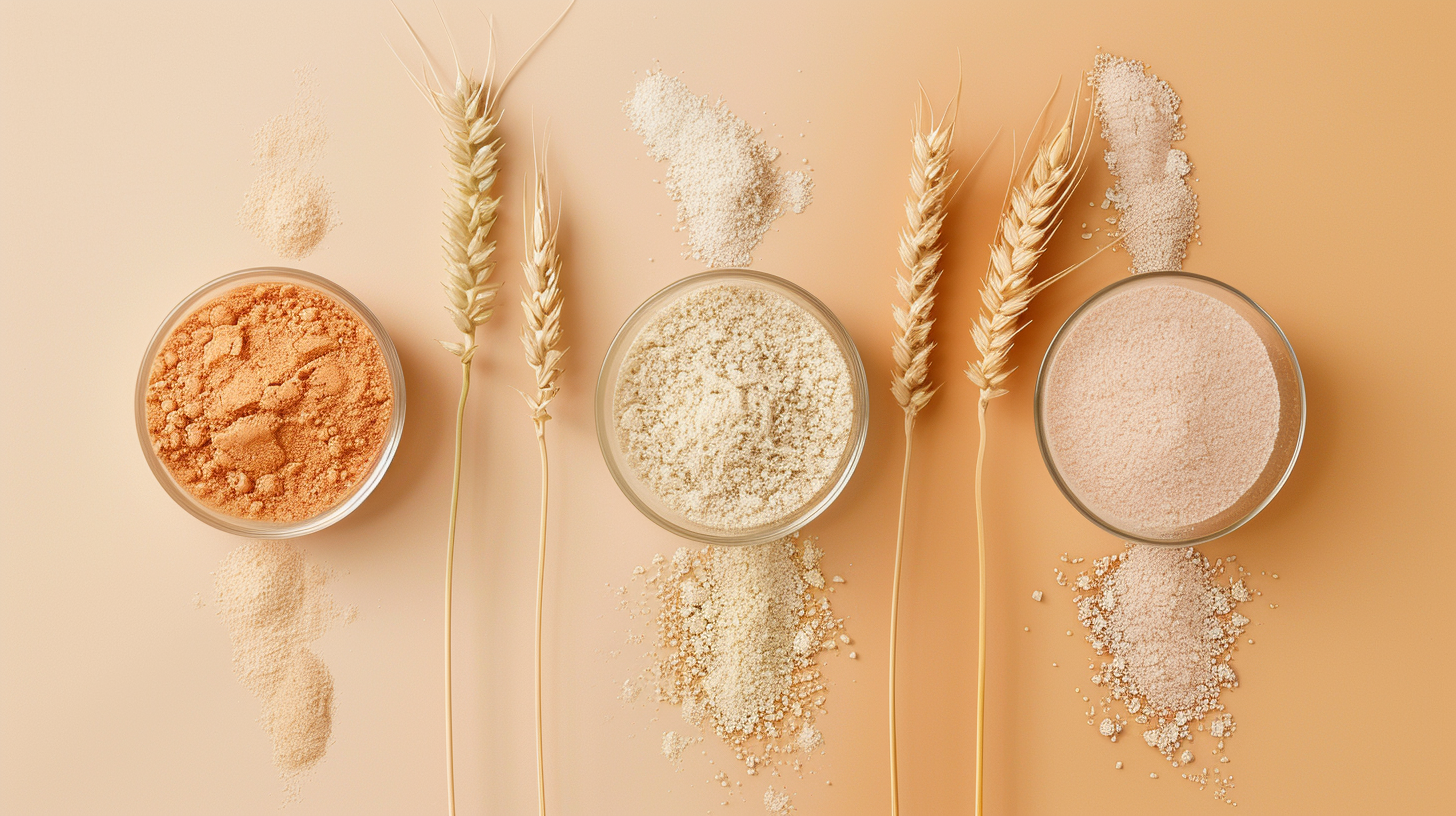
Azelaic acid is a naturally occurring saturated C9 dicarboxylic acid. It’s produced in small amounts in your own body, turns up in grains like wheat, rye, and barley, and has been sitting in prescription dermatology for decades. That biological familiarity is part of why it’s so well-tolerated — it isn’t foreign to your skin, and it isn’t trying to overpower any pathway.
In the US, it’s FDA-approved as Azelex 20% cream for acne and Finacea 15% gel or foam for papulopustular rosacea. Cosmetic formulations tend to sit at lower concentrations and avoid drug-level claims, often using derivatives like potassium azeloyl diglycinate (PAD) — which inherits some of azelaic acid’s mechanism, but nowhere near the same depth of direct evidence.
The most unusual thing about it: it genuinely does three different jobs, in three different skin conditions, at the same time. Most actives specialize. Azelaic acid doesn’t — and that’s the whole reason it keeps showing up in dermatology guidelines while quieter than its hype-magnet peers.
“Azelaic acid is relatively weak as a direct tyrosinase inhibitor; its pigment-correcting effects are better explained by selective activity against hyperactive or abnormal melanocytes, including thioredoxin reductase inhibition.”
Sieber & Hegel · Skin Pharmacology and Physiology, 2014 · View on PubMed →
Three jobs, one molecule
This is the part that makes azelaic acid editorially interesting. It has credible, published head-to-head data in three separate conditions — and in each one, it sits somewhere between “as good as the gold standard” and “slightly behind but meaningfully safer for long-term use.” Here’s how it actually stacks up:
Job 01 · Inflammatory
Acne
Strong evidence
Cochrane-reviewed evidence shows azelaic acid works comparably to tretinoin 0.05% and clindamycin 1%, and slightly behind benzoyl peroxide 5%. It’s slower to clear lesions than BPO but has a far cleaner tolerability profile — particularly useful when pigmentation follows acne.
vs. benzoyl peroxide: Slightly less effective but dramatically more tolerable. vs. topical antibiotics: Comparable efficacy, no resistance risk.
Job 02 · Vascular + Inflammatory
Rosacea
Strong for papules & pustules
Finacea 15% gel is one of the best-studied topical options for papulopustular rosacea. Head-to-head data shows it outperforms metronidazole 0.75% on inflammatory lesion reduction. Important caveat: it does not treat telangiectasia, fixed background redness, or phymatous disease.
vs. metronidazole: Better on inflammatory lesions. vs. ivermectin 1%: Slightly behind on network-level efficacy and tolerability.
Job 03 · Pigmentary
Melasma & PIH
Moderate evidence, off-label
The strongest off-label use. Azelaic acid 20% beats hydroquinone 2% and runs roughly comparable to hydroquinone 4% in older pooled studies — with a dramatically cleaner long-term safety profile. Exceptionally useful for skin of color where irritation-driven PIH is the main risk.
vs. hydroquinone 2%: Superior. vs. hydroquinone 4%: Roughly comparable. vs. tranexamic acid / cysteamine: Direct trials are sparse.
Why it works — the mechanism that gets misunderstood
Azelaic acid is often lumped in with “brightening” actives like kojic acid and arbutin, which is misleading. It’s actually a fairly weak direct tyrosinase inhibitor. Its pigment-correcting power comes from somewhere more specific: selective activity against hyperactive melanocytes. It essentially targets the cells that are misbehaving and mostly leaves normal ones alone.
That selectivity is why azelaic acid has a favorable hypopigmentation risk compared to hydroquinone — it doesn’t flatten normal pigment the same way. It also inhibits thioredoxin reductase and has downstream effects on abnormal DNA synthesis and mitochondrial function in affected melanocytes. This is a genuinely different mechanism, and it’s why dermatologists keep reaching for it in long-duration cases and darker skin types.
For the acne and rosacea indications, the mechanism is anti-inflammatory and anti-keratinizing. It normalizes the hyperkeratinization that clogs follicles, has direct antimicrobial activity against C. acnes, and tamps down ROS production in neutrophils — which explains the rosacea benefit. One molecule hitting multiple targets isn’t marketing speak here. It’s the literature.
Formats and concentrations — what each version is actually for
| Strength | Format | What it’s for |
|---|---|---|
| 20% | Prescription cream (Azelex) | The gold-standard dose for acne and the most-studied concentration for off-label melasma use. Creamier vehicle; generally better tolerated than the 15% gel. |
| 15% | Prescription gel (Finacea) | The FDA-approved format for papulopustular rosacea. Most likely of all formats to sting or burn at initiation. Works — the tolerability is the trade. |
| 15% | Prescription foam (Finacea) | Same concentration as the gel, meaningfully better tolerated in most patients. The format of choice if you’ve tried the gel and couldn’t stick with it. |
| ~10% | OTC / cosmeceutical | Common in K-beauty and indie skincare. Modest evidence — extrapolated from prescription data. Usually a reasonable entry point, not a replacement for 20%. |
| PAD | Potassium azeloyl diglycinate | A water-soluble cosmetic derivative. Better formulation flexibility, much gentler — but much of its mechanism claim is inferred from azelaic acid, not directly proven. |
Why Korean brands can’t legally say “whitening” about azelaic acid — even though it works.
Azelaic acid and potassium azeloyl diglycinate are not on Korea’s MFDS notified list of approved whitening-functional actives. That list is a specific regulatory register — ingredients like niacinamide, arbutin, and ethyl ascorbyl ether are on it. Azelaic acid isn’t. The practical consequence: a K-beauty product containing azelaic acid can legally claim “brightening,” “glow,” “tone-evening,” or “tone-correcting” — but it cannot use the legally restricted “미백” functional claim. That’s a regulatory label, not a statement about whether the ingredient works. It works. It just works outside the MFDS notified framework.
Evidence by claim — what actually holds up
| Benefit Claimed | Evidence | What the studies actually found |
|---|---|---|
| Clears inflammatory acne | Strong | Cochrane-reviewed evidence: comparable to tretinoin 0.05% and clindamycin 1%, somewhat behind BPO 5%. FDA-approved at 20%. Reasonable first-line choice where antibiotic stewardship, pregnancy compatibility, or simultaneous PIH treatment matter. |
| Reduces rosacea papules & pustules | Strong | FDA-approved at 15% for papulopustular rosacea. Outperforms metronidazole 0.75% on inflammatory lesions in head-to-head data. Does not treat telangiectasia, flushing, or phymatous disease — those need different interventions. |
| Fades melasma & hyperpigmentation | Moderate | 20% azelaic acid outperforms hydroquinone 2% and is roughly comparable to hydroquinone 4% in older pooled evidence. Much of this literature predates MASI scoring standards. Strong safety edge for long-term chronic use. |
| Treats post-inflammatory hyperpigmentation (PIH) | Strong | Uniquely useful here because it treats inflammatory acne AND the pigment that follows it — one active instead of a stack. Particularly relevant in skin of color where irritation-driven dyschromia is the primary concern. |
| Safer alternative to hydroquinone | Strong | No reported exogenous ochronosis. No cumulative-toxicity ceiling. No REMS program. No boxed warning. For long-duration depigmenting use — especially in darker phototypes — the safety advantage is meaningful and real. |
| Pregnancy-compatible | Strong | Historically FDA Pregnancy Category B. Systemic absorption is low; the molecule is endogenous. Widely regarded as one of the more pregnancy-compatible topical actives for acne and pigmentation. Individualize with a clinician. |
| Anti-aging / wrinkle reduction | Limited | Not a primary use. No meaningful RCT data on azelaic acid for photoaging-specific endpoints. If a product markets it for wrinkles, that’s outside what the literature supports. Look at retinol or peptides for that job. |
Safety, side effects, and who should proceed carefully
Azelaic acid’s safety profile is the quiet reason clinicians keep prescribing it. The main adverse effects are local — transient stinging, burning, pruritus, dryness — most commonly with the 15% gel vehicle, most commonly in the first two to four weeks. It typically settles with continued use. The 20% cream and 15% foam are better tolerated than the gel.
Three practical cautions — not dealbreakers, but worth knowing
Darker phototypes: Rare reports of localized hypopigmentation exist — monitor if you have type V–VI skin. Asthma: Post-marketing reports have flagged worsening asthma in a small number of users. Application: Avoid contact with eyes and mucous membranes — it stings. None of these change the ingredient’s overall position as a conservative long-term option.
Compared to the alternatives it most often replaces: no exogenous ochronosis (the permanent blue-grey staining tied to chronic hydroquinone). No retinoid dermatitis. No antibiotic resistance. No photosensitization. The ceiling on long-term use is essentially however long you want to use it. For a pigment-correcting active, that’s an unusual and valuable property.
Who this works for — and who should look elsewhere
Works well for
- Acne-prone skin with post-inflammatory pigmentation — treats both at once
- Papulopustular rosacea with inflammatory bumps and pustules
- Melasma, especially chronic cases needing long-term maintenance
- Skin of color where irritation-driven dyschromia is the main risk
- Pregnancy or breastfeeding — one of the most compatible topical actives
- Anyone wanting off the hydroquinone / antibiotic / retinoid treadmill
Look elsewhere if
- You have fixed background redness, telangiectasia, or phymatous rosacea — different category
- You need the fastest possible acne clearance — benzoyl peroxide is quicker
- You’re treating wrinkles or photoaging specifically — retinol or peptides fit better
- Your skin is already reactive and you can’t tolerate any initial stinging — start with a derivative like PAD
- You have known asthma and notice worsening on topical use — flag it with a clinician
Research citations
K Brand Ingredient Proof — Final Verdict
The quiet overachiever. Add it to your routine.
Azelaic acid doesn’t get the marketing volume of niacinamide or the glamour of retinol, and that’s largely because it doesn’t need to. It’s one of the only actives with real, Cochrane-reviewed evidence across three separate skin conditions — acne, papulopustular rosacea, and pigmentation — and a long-term safety profile cleaner than most of what it competes with. It’s slower than benzoyl peroxide, behind ivermectin on rosacea, and comparable to (not better than) hydroquinone 4% on melasma. The honest way to position it: not the fastest or most aggressive active you can buy, but one of the few that you can safely keep using for years, across multiple concerns, through pregnancy, and across most skin tones. That’s a rare combination. Worth the spend.
K Brand Ingredient Proof ratings are based on published peer-reviewed literature, Cochrane systematic reviews, FDA prescribing information, Korean MFDS regulatory guidance, and NCBI-indexed clinical trials — not personal product testing. This article is for educational purposes and does not constitute medical advice. Always consult a dermatologist for clinical skin concerns. For pregnancy-related decisions, individualize with your healthcare provider. This article may contain affiliate links. Full disclosure →